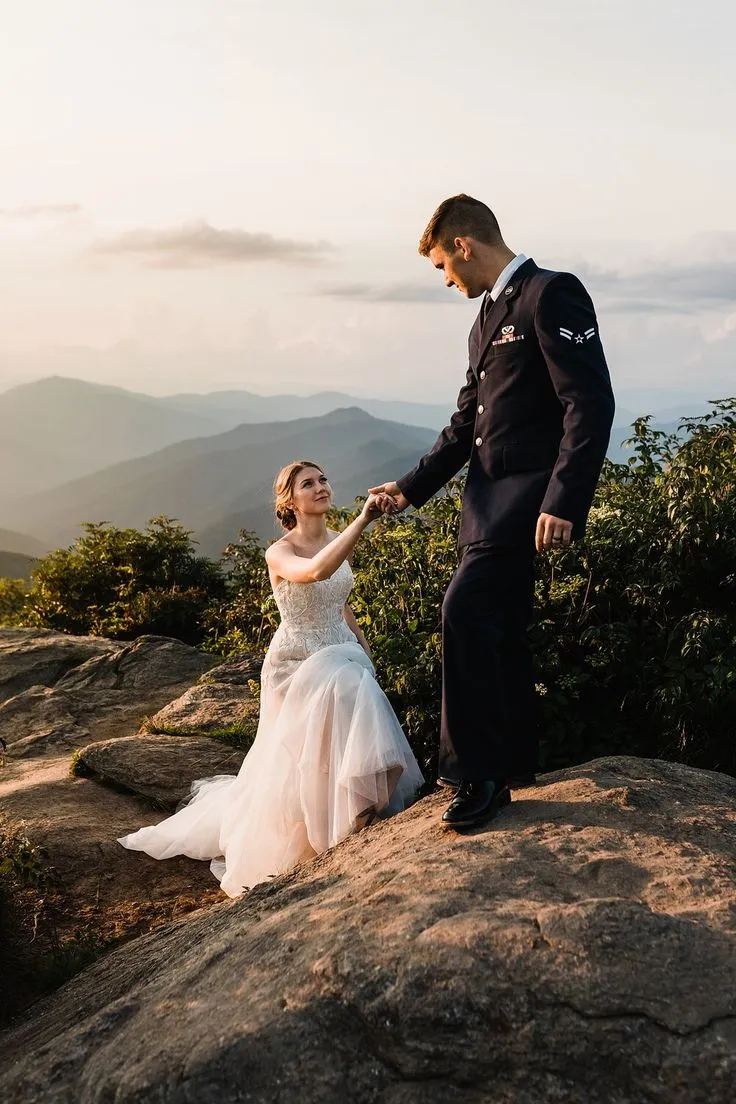
Mountain weddings create a striking setting, but clothing that works beautifully in a ballroom may behave differently on grass, gravel, wooded paths, or uneven overlooks. Couples do not need to sacrifice style for practicality, yet it helps to understand how fabric, footwear, layers, and accessories respond to the environment. Thoughtful attire choices can make it easier to move comfortably, stay present during portraits, and avoid spending the day worrying about hems, shoes, wind, or changing temperatures.
Choose Fabric With Movement in Mind
Some fabrics move naturally in a breeze, while others hold their structure or show wrinkles more easily. The right choice depends on the look the couple prefers and how much walking or outdoor time the wedding includes.
Someone working with an Asheville Elopement Photographer may spend more time moving between outdoor locations than a couple marrying entirely indoors. Lightweight layers, manageable trains, and fabrics that tolerate movement may make an elopement easier without making the clothing feel casual.
Consider how the outfit behaves when sitting, walking uphill, or standing in wind.
Think About Hem Length Before the Wedding Day
A long train can look dramatic in photographs, but it also collects leaves, dust, moisture, and debris quickly. Couples who love that look can still choose it; they simply need realistic expectations. Bustles, detachable overskirts, or a trusted person who can help carry the train between locations may reduce frustration. It is also worth practicing the bustle before the wedding rather than learning it during the reception. Shorter dresses, jumpsuits, or tailored suits may offer easier mobility, but fit still matters on steps or slopes.
Make Footwear Part of the Plan
Shoes influence balance, pace, and comfort. A pair that feels fine on a smooth floor may become difficult on gravel, wet grass, or a mountain trail.
Couples do not have to give up formal footwear. Many bring a second pair for travel between locations or outdoor portraits. Boots, flats, or shoes with wider heels can make uneven ground easier while the formal pair remains available for the ceremony or reception. Breaking shoes in beforehand can also prevent discomfort later.
Plan for Temperature Changes
Mountain temperatures can shift noticeably between afternoon and evening, particularly at exposed outdoor venues. Clothing plans should account for the full wedding day rather than only the ceremony hour.
A couple working with a Destination Wedding Photographer Asheville may also be arriving from a much warmer or cooler climate and underestimate local conditions. Jackets, wraps, shawls, or discreet base layers can provide warmth without changing the overall style.
An attractive outer layer is especially useful when evening portraits or an outdoor exit are planned.
Keep Accessories Secure
Veils, hats, jewelry, floral pieces, and hair accessories can add personality, but wind changes how they behave. A long veil may create beautiful movement while also needing secure placement. Lightweight hats can lift unexpectedly, and delicate hairpieces may loosen.
Couples should test important accessories before the wedding and ask their stylist how they can be secured. Extra pins, fashion tape, or a small repair kit can solve minor problems quickly.
The aim is not to eliminate movement but to avoid spending every outdoor moment adjusting something.
Choose Clothing That Still Feels Like You
Practical advice should not turn mountain wedding attire into a uniform. Some couples want formal tailoring, dramatic gowns, or elaborate accessories because the contrast with the landscape feels exciting. Others prefer simpler clothing that supports a relaxed day.
The strongest choice is one that matches the couple’s personality while acknowledging the setting. When clothing fits well and allows natural movement, people are more likely to forget about it and focus on the experience.
Prepare for a Little Imperfection
Outdoor wedding clothing may not remain spotless. A hem can pick up dirt, shoes may show dust, and wind may move hair or fabric. Those details do not automatically ruin photographs.
For many couples, a little evidence of the environment becomes part of the story. Preparing mentally for that possibility can be more useful than trying to keep every element untouched from morning to night.
Conclusion
Mountain wedding attire works best when style and movement are considered together. Fabric, hem length, footwear, layers, and accessories can all affect how easily a couple moves through outdoor spaces and how comfortable they feel while being photographed. The goal is not to choose the safest or simplest outfit, but clothing that supports the celebration being planned. When couples understand the terrain and prepare for changing conditions, they can wear something that feels personal, photographs beautifully, and still lets them enjoy the landscape instead of constantly managing what they are wearing.